How Home Buyers Price a House: ARV, Offer Percentages, and the Real Cost of a Flip Explained For Homeowners who Want to Sell The House Fast

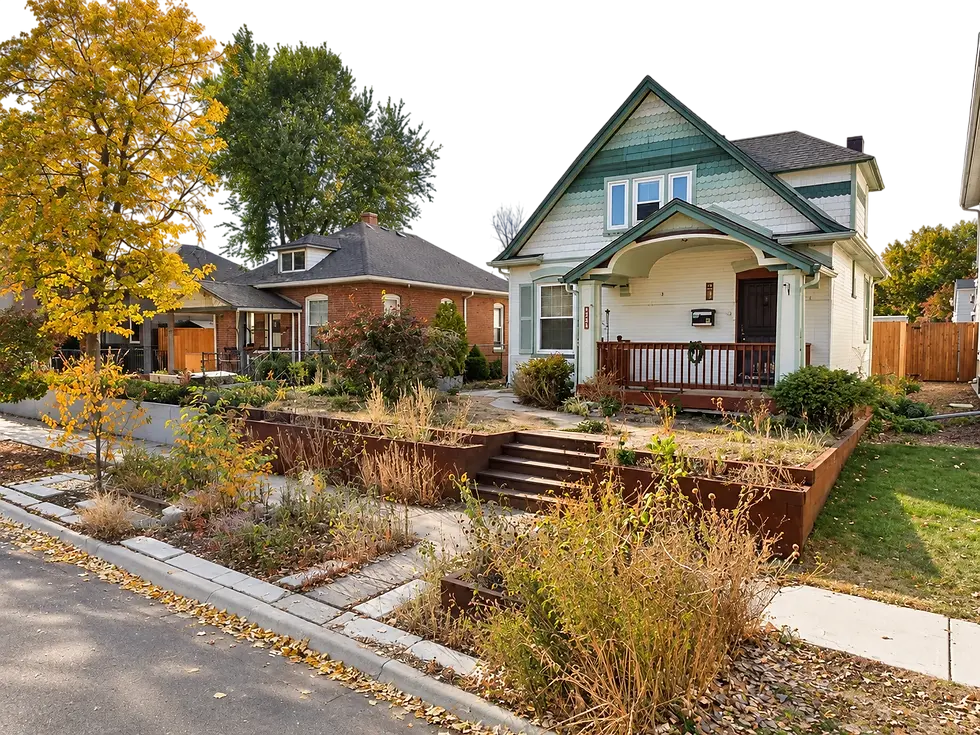
Why a cash offer is lower than a listing price
A cash home buyer's offer starts from what the house will be worth after it is fixed up, then subtracts everything it costs to get there. That number is called the After Repair Value (ARV), and nearly every investor, flipper and wholesaler prices a house the same way: a percentage of ARV, minus repairs. For a home owner who wants to sell a house fast a cash offer is offten the best.
The percentage is where buyers differ. Many investors still use the old "70% rule," while others go to 80%, 81% or 82%. Henry Purchases Homes offers up to 84% of ARV minus expenses, which puts more money in the seller's pocket than most cash buyers will.
This guide walks through how buyers estimate ARV, how the percentage works, and the hidden costs that explain why no buyer can pay 100%.
What ARV is and how buyers estimate it
ARV is the price a house should sell for once it is fully repaired and updated. It is not today's value in as-is condition, and it is not the tax assessor's number.
Buyers estimate ARV from comparable sales ("comps"):
Pull 3–5 recently sold homes nearby, ideally within the last 3–6 months and within about half a mile.
Keep only comps that are remodeled and similar in size, bedrooms, baths, age and style.
Divide each sold price by its above-grade square footage to get price per square foot.
Average those figures and multiply by the subject home's above-grade square footage.
Comp | Sold price | Sq ft | $ / sq ft |
456 Maple Ave | $425,000 | 720 | $590 |
789 Oak Dr | $407,000 | 720 | $565 |
Average | $578 |
A 720 sq ft subject home × $578 per sq ft gives an ARV of about $416,000. Basements are usually valued separately from above-grade space, which is why buyers use above-grade footage for this step.
ARV is an estimate, not an appraisal. If a buyer's ARV is too high, the whole offer is too high, so good buyers check comps carefully and walk the property.
The offer formula: a percentage of ARV minus repairs
Every cash buyer uses a version of this formula:
Max offer = (ARV × buyer's percentage) − repairs
The percentage is the buyer's choice, and it sets how much room they leave for loan interest, holding costs, selling costs and profit. A lower percentage means a safer deal for the buyer and less money for the seller.
Using the example home ($416,000 ARV, $75,000 in repairs), here is what each percentage means for the seller:
Buyer's % of ARV | ARV × % | Minus repairs | Offer to seller | Difference vs. 70% |
70% (classic flipper rule) | $291,200 | −$75,000 | $216,200 | — |
75% | $312,000 | −$75,000 | $237,000 | +$20,800 |
80% | $332,800 | −$75,000 | $257,800 | +$41,600 |
81% | $336,960 | −$75,000 | $261,960 | +$45,760 |
82% | $341,120 | −$75,000 | $266,120 | +$49,920 |
84% (Henry Purchases Homes) | $349,440 | −$75,000 | $274,440 | +$58,240 |
Each percentage point of ARV is worth about $4,160 on this house. On a $416,000 home, the gap between a 70% buyer and an 84% buyer is more than $58,000.
The repair number matters just as much. Buyers estimate it room by room: paint, flooring, kitchen, baths, HVAC, electrical, doors, exterior, windows, water heater, trash-out and basement, then round up for surprises.
Renovation cost per square foot in Denver metro
In Denver metro, renovations run roughly $15 to $60 per square foot for a light cosmetic refresh, up to $400–$700+ for a luxury gut. The level of work, not the size of the house alone, drives the number.
Caveat: these prices fluctuate wildly. Published Denver ranges for the same type of job differ by 3× or more between sources. Labor availability, material tariffs, permits, the home's age and condition, and what turns up once walls are opened can move a budget sharply up. Treat every figure here as a starting point and get contractor bids before committing.
Level of work | What it usually includes | Cost per sq ft (Denver metro) | Source |
Light cosmetic | Paint, flooring, fixtures, landscaping | $15–$60 | |
Standard flip rehab | Cosmetic work plus kitchen and bath updates | $50–$150 | |
Comprehensive remodel | Layout changes, full mechanical updates | $200–$400 | |
Luxury gut renovation | Down to studs, premium systems and finishes | $400–$700+ | |
Basement finish | Framing, drywall, flooring, often a bath | $35–$150 | |
Home addition | New foundation, framing, roof and finishes | $300–$500 |
Investors usually land at the low end of these ranges. They use investor-grade materials, repeat contractors and skip layout changes, while homeowner remodel quotes include retail markups and custom finishes.
Rehab cost guide: line items at 2026 Denver market prices
Each line below shows a 2026 Denver market price, set near the middle of current Denver contractor ranges. Items marked "estimate" had no current Denver source and were raised for 2026 labor and material increases, so get a bid on those. As the caveat above says, real quotes for the same job can land well above or below these numbers.
Paint and drywall
Item | Unit | Price | Basis |
Interior paint | per sq ft of floor | $4.00 | Denver $2–$6 (Angi) |
Full exterior paint | per sq ft of floor | $3.00 | $2–$4 per floor sq ft (HomeGPT) |
Exterior trim only | per sq ft of floor | $1.50 | Estimate |
Scrape and texture ceiling | per sq ft | $2.00 | Denver $1–$2 (Daeco) |
Texture walls | per sq ft | $1.75 | Texture adds $1–$3 (Angi) |
New trim package | per sq ft of floor | $3.75 | Estimate |
Sheetrock room | per room | $900 | Estimate |
Flooring (installed)
Item | Unit | Price | Basis |
Carpet | per sq ft | $5.00 | Denver mid-grade $4–$6 (Denver Dream Builders) |
Tile | per sq ft | $15.00 | Denver $9–$20 (Angi) |
Solid wood | per sq ft | $14.00 | Denver $10–$22 (Denver Dream Builders) |
Engineered wood / LVP | per sq ft | $6.00 | Denver LVP $5–$12 (Denver Carpet & Flooring) |
Refinish wood floors | per sq ft | $4.50 | Denver $3–$8 (JR Hardwood) |
Kitchen (scaled to ARV)
Home's ARV | Kitchen price |
Under $300,000 | $15,000 |
$300,000–$399,999 | $18,000 |
$400,000–$499,999 | $22,000 |
$500,000–$699,999 | $26,000 |
$700,000–$899,999 | $35,000 |
$900,000–$1,099,999 | $50,000 |
$1,100,000 and up | $75,000 |
Denver budget kitchens run about $12,000–$15,000 and minor remodels $15,000–$30,000 (RenovCost, KBD Colorado). Imported cabinets and vanities still carry a 25% tariff.
Baths
Item | Unit | Price | Basis |
Basic bath | each | $12,000 | Denver basic remodel $12,000–$20,000 (Frontier Design) |
5-piece master | each | $22,000 | Denver mid-range $20,000–$35,000 (Frontier Design) |
Create new master | each | $28,000 | Estimate: mid-range bath plus new plumbing |
Half bath – light update | each | $1,000 | Estimate |
Half bath – full update | each | $6,000 | Denver cosmetic refresh from $5,000 (Frontier Design) |
Master bath (ARV $800k+) | each | $40,000 | Denver high-end $35,000–$60,000 (Frontier Design) |
HVAC
Item | Unit | Price | Basis |
Condenser (A/C) | each | $6,500 | Denver $3,300–$10,400 (Angi, HVAC Project Cost) |
Furnace | each | $6,500 | Denver $4,700–$8,450 (Costadia) |
New system (furnace + A/C) | each | $13,000 | Denver $8,000–$17,000 (HVAC Project Cost) |
Swamp cooler | each | $2,000 | Estimate |
Electrical
Item | Unit | Price | Basis |
Fixture package | per sq ft of floor | $2.25 | Estimate |
Can lights | each | $275 | Estimate |
Update two-prong plugs | per house | $3,500 | Estimate |
New exterior panel (200A) | each | $5,500 | Denver $4,000–$7,500 (Over-All Electric) |
Move interior panel outside | each | $7,500 | Estimate: full upgrade plus relocation |
Re-wire | per sq ft of floor | $8.00 | $6–$10 with walls opened (HomeAdvisor) |
Doors
Item | Unit | Price | Basis |
Interior door | each | $300 | Estimate |
Exterior door | each | $800 | Estimate |
Front door – basic | each | $1,000 | Estimate |
Front door – upgraded | each | $2,000 | Estimate |
French door set | each | Estimate | |
Garage door | per car | $1,800 | Estimate |
Exterior
Item | Unit | Price | Basis |
Roof | per sq ft of floor | $10.00 | Asphalt $6.73 per sq ft of roof, about 1.3 sq ft of roof per sq ft of floor (Instant Roofer) |
Siding | per side | $3,500 | Colorado vinyl $9–$18 per sq ft of wall (Excel Roofing) |
Landscape package | each | $3,500 | Estimate |
Tree trimming | per tree | $450 | Estimate |
Fence (wood privacy) | per linear ft | $32 | Colorado wood privacy $15–$35 (CostFlow) |
Basic 2-car garage with pad | each | $40,000 | Estimate: get a bid |
Concrete | per sq ft | $12.00 | Denver driveway $8–$20 (Angi) |
Miscellaneous
Item | Unit | Price | Basis |
Windows (vinyl, Energy Star) | each | $700 | Denver vinyl $450–$850 (Window Replacement Denver) |
Water heater | each | $2,500 | Denver $1,700–$4,000 (Design Transition Studio) |
Trash out | per dumpster | $1,400 | Estimate |
Foundation | bid | Bid | Always get an engineer's bid |
Move laundry room | each | $3,500 | Estimate |
Basement
Item | Unit | Price | Basis |
Finish unfinished basement | per basement sq ft | $45.00 | Denver budget finish $35–$65 (Apollo Renovation) |
Update finished basement | per basement sq ft | $15.00 | Estimate |
Add 3/4 bath | each | $18,000 | Estimate: basic bath plus new plumbing |
Add egress – unfinished basement | each | $4,500 | Denver $3,050–$5,820 (Angi) |
Add egress – finished basement | each | $5,500 | Denver $4,000–$7,500 (CountBricks) |
At these market prices, the example home's scope comes to about $128,000. Most of that is the three bathrooms, where retail Denver prices run high.
Why small houses cost more per square foot
The example home's $75,000 rehab works out to about $104 per square foot on 720 sq ft. A kitchen, bathroom and water heater cost about the same in a small house as in a large one, so those fixed costs push the per-foot figure up. The same scope on a 1,500 sq ft home would come out closer to $60–$70 per square foot.
The hidden costs that come out of the percentage
Repairs are only part of the cost of a flip. Everything below is paid out of the gap between the offer and the ARV, which is why no buyer can offer 100%.
Cost | Typical assumption | Why it is high |
Renovation loan interest | 12% per year on purchase + repairs | Flips are funded with short-term hard-money loans, which cost far more than a 30-year mortgage and often add 1–3 points up front |
Holding period | About 6 months | Closing, permits, contractor schedules, repairs, listing and the buyer's own closing all take time |
Taxes, insurance and utilities | About $650 per month | A vacant home still needs insurance, heat, power and water, and taxes keep accruing |
Purchase closing and title | About 1.5% of purchase price | Title insurance, escrow and lender fees on the way in |
Agent commissions to resell | About 5.5% of ARV | The finished house is usually listed on the open market |
Resale closing and concessions | About 1.5% of ARV | Seller-paid closing costs, inspection credits and buyer requests |
Surprises | Rounded into repairs | Foundation, sewer lines, wiring, mold and permit issues often appear only after walls open |
Cost assumptions above are the defaults in the offer calculator used for this guide. Actual rates vary by lender, market and property.
Carrying costs compound: every extra month adds interest, taxes, insurance and utilities. A three-month delay on a single project can erase a thin margin entirely.
A full cost breakdown of one flip
At 84% of ARV, the buyer of the example home keeps about $8,500, roughly 2% of the sale price. Here is where the $416,000 goes:
Line item | Amount |
After repair value (sale price) | $416,000 |
Paid to seller (84% × ARV − repairs) | −$274,440 |
Repairs | −$75,000 |
Purchase closing and title (1.5%) | −$4,117 |
Loan interest, 12% for 6 months | −$20,966 |
Taxes, insurance and utilities, 6 months | −$3,900 |
Agent commissions to resell (5.5%) | −$22,880 |
Resale closing and concessions (1.5%) | −$6,240 |
Left for buyer's profit and risk | $8,457 |
The percentage a buyer chooses is really a choice about how much of that last line to keep:
Buyer's % of ARV | Offer to seller | Buyer's estimated profit | Profit as % of ARV |
70% | $216,200 | $71,065 | 17.1% |
75% | $237,000 | $48,705 | 11.7% |
80% | $257,800 | $26,345 | 6.3% |
82% | $266,120 | $17,401 | 4.2% |
84% | $274,440 | $8,457 | 2.0% |
Higher percentages move money from the buyer to the seller. They also leave the buyer less cushion if repairs run over or the house takes longer to sell.
Henry Purchases Homes: up to 84% of ARV minus expenses
Henry Purchases Homes offers up to 84% of ARV minus repairs, one of the highest percentages among cash home buyers. On the example home, that is $58,240 more than a 70% offer and $8,320 more than an 82% offer.
The percentage is set by the home's ARV:
ARV | Percentage offered |
Under $600,000 | 84% |
$600,000 – $699,999 | 83% |
$700,000 – $799,999 | 82% |
$800,000 – $899,999 | 81% |
$900,000 and up | 80% |
Every offer comes with a written breakdown: the comps behind the ARV, the repair estimate line by line, and the costs to buy, hold and resell. Sellers can check each number instead of taking a single figure on faith.
What sellers get with a Henry Purchases Homes offer:
A cash offer on the house as-is, with no repairs or cleaning
No agent commissions paid by the seller
A closing date the seller chooses
How to compare cash offers
Ask each buyer what ARV they used and which comps support it
Ask what percentage of ARV they offer
Ask for the repair estimate, line by line
Compare the final cash-to-seller number, not only the headline percentage
Confirm who pays closing costs and whether there are any fees deducted at closing
Check proof of funds and how fast they can close
Frequently asked questions
Why doesn't a cash buyer pay full market value? The buyer pays for repairs, a high-interest renovation loan, months of holding costs, and about 7% in selling costs before earning anything.
Is the 70% rule still standard? Many flippers still use it because it leaves a wide safety margin. Buyers with lower costs can offer 80% or more.
Does a higher percentage always mean a better offer? Usually, but only if the ARV and repair numbers are honest. A high percentage on a low ARV, or with inflated repairs, can come out lower.
Can I sell as-is? Yes. The repair estimate is already subtracted from the offer, so the seller does not fix anything first.
Figures in this guide are estimates for illustration, not an appraisal. Actual ARV, repair and resale costs vary by property.
Writen by Henry Bretz 9/29/2026


Comments